    |
|
|
|
 |
|
|
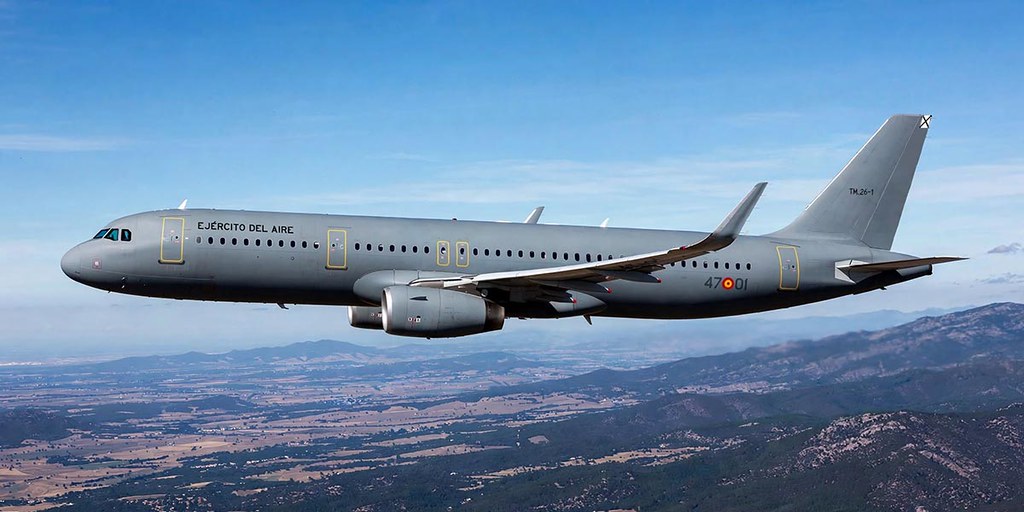
The Spanish Air Force is a very comprehensive air force, but it has gone years without any intelligence aircraft.
In 2004, the Spanish Air Force established the 47th Mixed Air Force Group, which operated four Falcon 20 aircraft (designated in Spain as TM.11 and nicknamed "Brujo")—used for radio aid calibration, remote sensing, and electronic warfare training—and four Boeing 707s. One of them, the TM.17-4—known as "Reina del Espectro" (Spectre Queen) —was used for intelligence missions; it was outfitted for this role in Israel under the Santiago Program—named after the Santiago System, the designation for the Spanish Armed Forces' Joint Signals Intelligence System.

The last Boeing 707 was retired from service in September 2016 (it was the T.17.3 47-03, an aircraft dedicated to transport and logistics missions), while the last two Falcon 20s were decommissioned in December 2020 (the T.11-3 and T.11-4). Two years after being left without aircraft—and with no prospect of receiving new ones—the 47th Group was disbanded in March 2022, and its responsibilities were transferred to the Aerospace Intelligence and Targeting Center (CINTAER), which currently lacks aircraft.

On November 13, 2025, the Official State Gazette (BOE) published Royal Decree 1032/2025, which established the regulations governing the granting of loans to various entities for the development of the Santiago Phase II program, aimed at providing a new intelligence aircraft to the Air Force.
The published text outlines two sub-programs. The first, designated the Conceptual Study and Definition of a Manned SIGINT Aerial Platform (REE-SCAPA), aims to "achieve the capability to detect, track, and classify contacts of interest, as well as to obtain associated Signals Intelligence from manned aerial platforms." This sub-program received an allocation of €5.99 million for its conceptual design, awarded to Airbus Defence and Space and SAU-Indra Sistemas.
The decree also stated the following: "The Santiago Program is classified as SECRET and includes, among other capabilities, the acquisition of manned aerial platforms with signals intelligence (SIGINT) capability. The acquisition of manned aircraft with SIGINT capability aims to achieve the ability to detect, track, and classify contacts of interest, as well as to obtain the associated signals intelligence."

The program is divided into two phases: an initial phase to study the various options, and a second phase for "the implementation of the SIGINT system on three aircraft, as outlined in the Chief of Defence Staff’s (JEMAD) General Staff Requirements document. To this end, the necessary modifications to the selected aircraft will be considered in order to implement the SIGINT solution determined in the previous phase." Two paragraphs later, the decree emphasized "the manufacture of three manned aircraft with SIGINT capability," after noting "the manufacture of said aerial platforms within Spanish territory and by the domestic industry" as an added value.
Until now, the Air Force has handled this matter with considerable discretion. However, we have just received new information regarding it in Revista de Aeronáutica y Astronáutica issue No. 956 (see PDF), corresponding to October 2026. This official Air Force publication states on page 8:
"Spain has joined the NATO Crewed Airborne Early Warning initiative, in which up to 11 allies—including Sweden, Denmark, Germany, Finland, France, Poland, and Turkey—will participate in the joint procurement of 10 units of the Swedish Saab GlobalEye system, selected by NATO from among several candidates in July 2026. Spain could thus regain a critical strategic capability, aligning itself with NATO while retaining the scope for a domestic solution should it wish to prioritize technological sovereignty and industrial returns."
The most interesting part follows, as it discusses the Santiago II Program for the acquisition of those three intelligence aircraft:
"This solution would be primarily based on Airbus, since—having selected the A321 for its SIGINT program (Santiago II-SCAPA)—there is a possibility of extending this program to a domestic AEW solution. The initiative, whether involving a NATO platform or a domestic development, is strategic in that it bolsters aerial surveillance and command and control, while reducing reliance on allied assets in critical areas such as the Canary Islands, the Strait of Gibraltar, and the southern flank, including Ceuta and Melilla."
In other words, the Spanish Air Force has already selected the Airbus A321 as the platform for its three new SIGINT aircraft—meaning the program is already in its second phase—and is also considering using the same aircraft model for Airborne Early Warning (AEW) missions. This is a capability the Air Force has never possessed; acquiring it would grant significant autonomy from NATO, given that, until now, we have relied on the Alliance's E-3 Sentry AWACS aircraft for such missions.

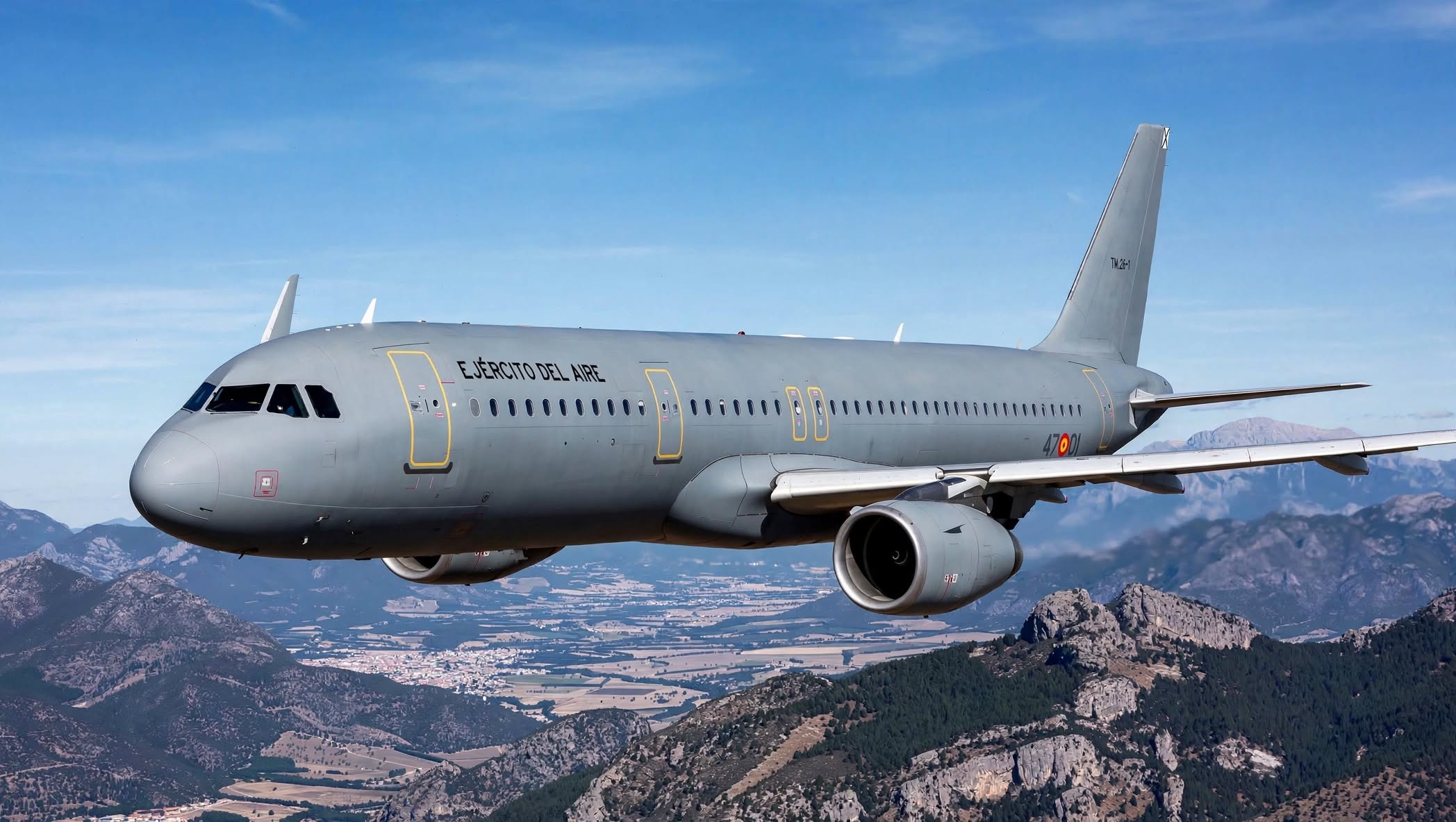
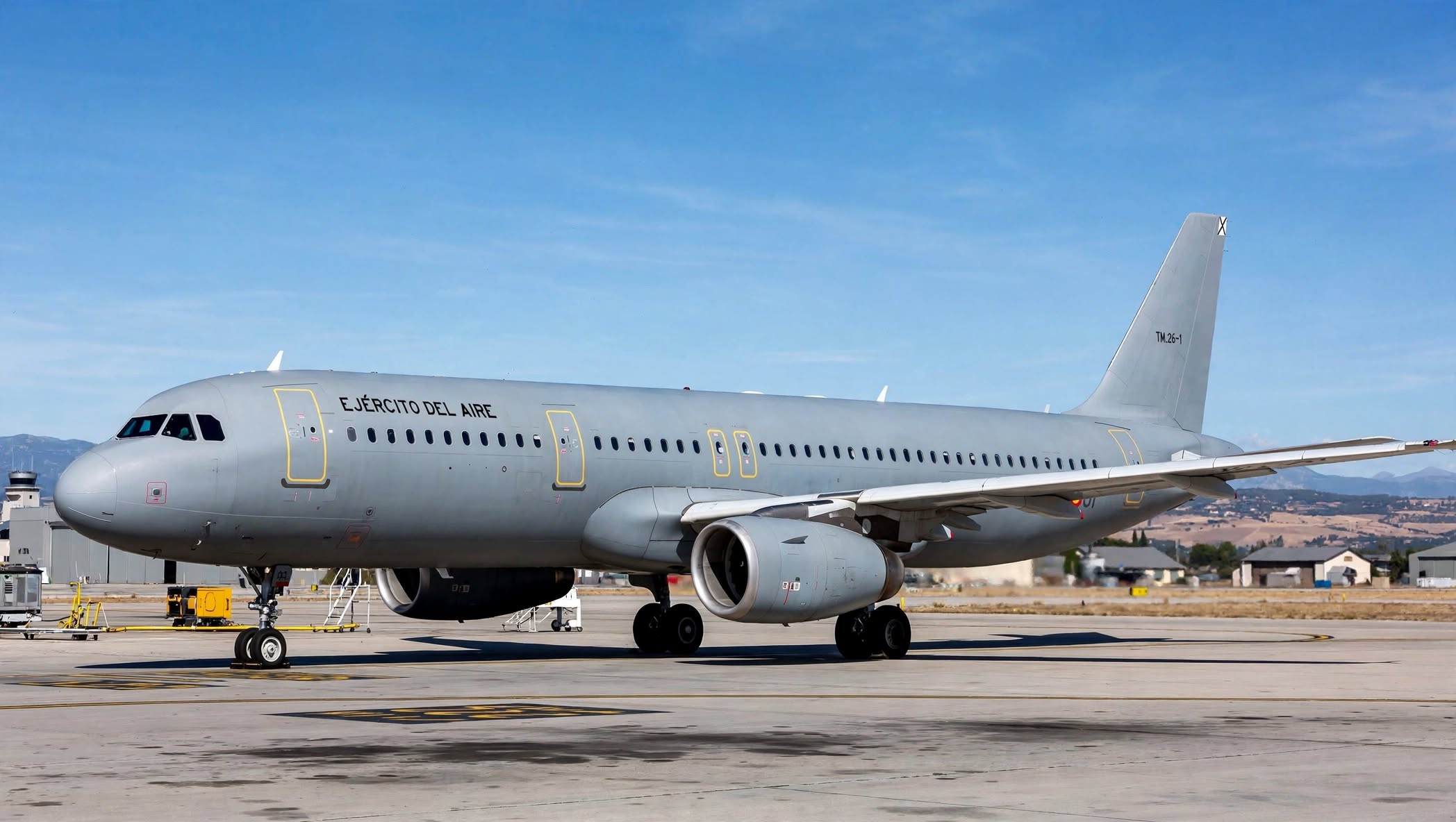
The Airbus A321 is a stretched version of the European manufacturer's best-selling model, the A320. It is a twin-engine, narrow-body aircraft that made its maiden flight on March 11, 1993, and of which more than 3,400 units have been built. Currently, its only military operator is the German Luftwaffe, which operates one A321-200 and two A321neos for transport duties. The Spanish Air Force will likely receive the A321neo version, though this remains to be confirmed. The images of a Spanish A321 featured in this article depict the A321neo variant; I created them using artificial intelligence to illustrate what these three new SIGINT aircraft might look like.
---
Main image and remaining images of the Spanish A321: Meta.ai / Defensa y Aviación.
|
Don't miss the news and content that interest you. Join Defense and Aviation for free on Telegram: Click here to join |


Opina sobre esta entrada: