    |
|
|
|
|
|
|
My mobile phone is like a little catch-all. You can find pictures of the Warsaw Uprising of 1944, fragments of "Peter Pan" and quotes from Cicero and Tolkien.
Three men alone against an entire army
For weeks now I have had on my phone a fragment of the poem "Horace and the Bridge" from the book "Songs of Ancient Rome" by Lord Macaulay, which tells of the heroic defense of the Sublician Bridge, over the Tiber River, by the Roman hero Horatius Cocles against the Etruscans. The Etruscans were advancing against Rome and the city had no hope of salvation other than to knock down the bridge before the invaders crossed it. One man, Captain Horatius Cocles, volunteered to face the Etruscans along with two other companions, Herminius and Spurius Lartius. Three men willing to die for their country facing an entire army. The most famous moment of the story is when the captain, Horatius, lends himself to such a desperate defense:
"To every man upon this earth
Death cometh soon or late.
And how can man die better
Than facing fearful odds
For the ashes of his fathers
And the temples of his gods?"
What are we doing with our parents' ashes?
These past few weeks I have often thought about this poem, in reference to the many voices in our society that despise the legacy we have inherited. And I am not referring to material goods, but to much more valuable things: faith, honour, principles, integrity, patriotism... A part of our society has been throwing away this treasure that the centuries have bequeathed to us, as if it had no value. History itself is ignored, ridiculed or manipulated to accommodate an easier and more comfortable way of seeing life, one that does not require sacrifice or commitment, and that often treats people as objects that can be discarded when they are no longer needed. For this way of understanding life, there is nothing worth dying for. Neither family, nor country, nor freedom nor honour. All these causes are even disqualified by saying that they are mere words, and that a set of letters is not worth taking any risk.
"A people who know how to die cannot be slaves"
There are many people who believe that this has made them freer. There are people who think that honour, principles and commitment are yokes that do not allow them to live - let's put it bluntly - doing what they want, what is most comfortable, what is easiest. They do not realize that they have fallen into the cheapest and most pathetic form of slavery. And the fact is that a society that values, above all else, its pleasure and its tranquility, is at its core a weak society, willing to give up anything in order not to lose that comfort. In his famous "Ode to the Second of May", Bernardo López García wrote two verses that any people who sincerely love freedom should engrave in their memory: "A people who know how to die cannot be slaves".
The example of the British people in World War II
History is full of examples that illustrate this wise statement by the Spanish poet. In fact, in the last century, there was a people, the British, who could have accepted surrender and survived as slaves of the Nazis, but decided to fight to preserve their freedom, knowing full well that in defending it they ran the risk of encountering suffering, death and destruction. I am Spanish and there are many things in history books that make me a critic of Great Britain, but I admit that I find the courage and fortitude shown by the British in the Second World War admirable, because they showed that they knew that there are things for which it is worth fighting, even at the risk of your own life.
"Darkest Hour"
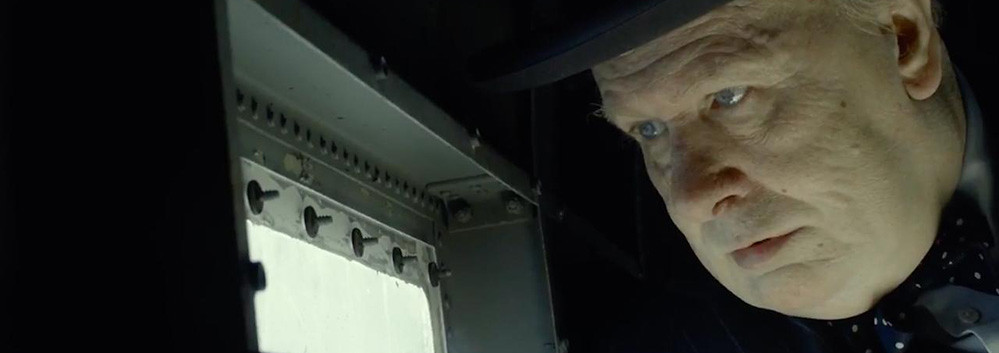
It is precisely about this historical episode that the film I saw last night is about: "Darkest Hour", which focuses on the character of Winston Churchill, Prime Minister of the United Kingdom during the difficult times of the invasion of France by the Germans and the evacuation of Dunkirk. A film that I recommend, not only for its remarkable cinematographic quality, but also for the reflection it raises and how it raises it: I happened to find in it the aforementioned fragment of "Horace and the Bridge". Churchill is still a controversial figure today, as he was at the time. The reason for this can be seen in the film itself: many politicians of his time believed it was convenient to appease the Nazis first, and then once the war had started, try to achieve peace by giving in to them. The policy of appeasement promoted by Neville Chamberlain allowed Hitler, in fact, to annex the Sudetenland and occupy the rest of Czechoslovakia in 1938, obtaining the resources and time necessary to arm himself and launch, in 1939, the invasion of Poland, unleashing the Second World War and causing the death of millions of people. If the United Kingdom had acted firmly when others imposed appeasement, the result would surely have been very different.
A nation that no longer cares about the blood shed for it
History is a wise teacher, but despite the terrible experience of that conflict, part of humanity is still determined to forget. What happened then is applicable to other subsequent events. As a Spaniard, I cannot forget what happened in my country: the humiliating negotiation process initiated by Zapatero with the ETA terrorists in 2006, lying to the Spanish people. With this, Spain transmitted to those totalitarian criminals the worst thing that can be shown to scum like them: weakness. As a result, today the pro-ETA people have more political power than ever, and many victims of ETA have been humiliated and betrayed by those who had promised them justice and who had asked them to place their trust in the rule of law. It is no coincidence that a few years later Catalan nationalism was encouraged to challenge Spain with a separatist coup. A nation that shows itself weak is inviting its enemies to take advantage of it, to make it a target for blackmail, to change its laws for the law of the strongest. And worse still: it is transmitting to its children that the blood shed for it, the sacrifices assumed for so many years by it, no longer matter to it, because it is willing to waste them in order not to lose the peace. A shameful peace, because it is not harmony, but humiliation and surrender to the enemies of Spain and freedom. That is the repulsive message that a nation sends when it shows itself weak in its darkest moment. We should all seriously reflect on our responsibility in this regard.
|
Don't miss the news and content that interest you. Join Counting Stars for free on Telegram: Click here to join |




Opina sobre esta entrada: