    |
|
|
|
 |
|
|
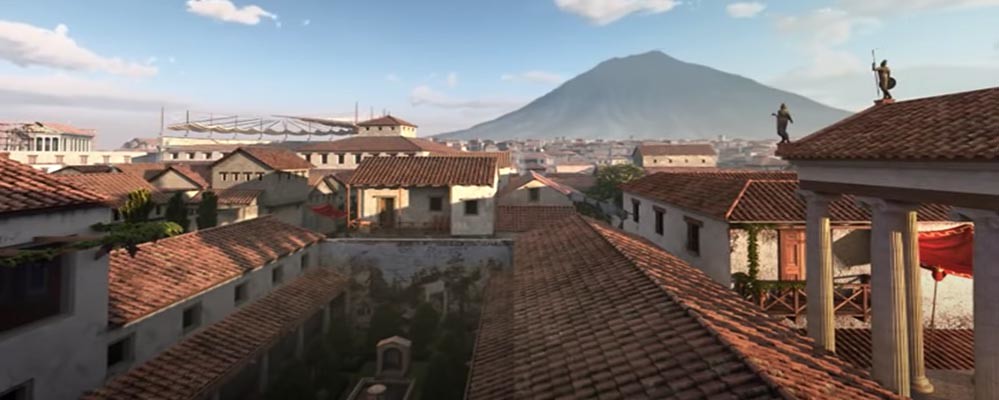
One of the most famous volcanic eruptions in history, and one of the deadliest in European history, was that of Mount Vesuvius in 79 AD.
The eruption took place on August 24, 79. Today we know in some detail what happened thanks to the Roman writer and scientist Pliny the Younger, who witnessed the eruption when he was 18 years old (he was 30 kilometers from the site) and left a written document describing it, specifically a letter addressed to Cornelius Tacitus. It is the only documentary testimony that has come down to us from an eyewitness of that disaster, in which thousands of people died.
The eruption of Vesuvius destroyed and buried the Roman cities of Pompeii, Herculaneum and Stabia, near present-day Naples. The degree of destruction was such that the location of these cities was forgotten, and they were not discovered until more than 1,600 years after the eruption. Incidentally, it was a Spanish military engineer, Roque Joaquín de Alcubierre, who discovered the remains of Herculaneum and Pompeii, in 1738 and 1748, respectively.
Today, the dramatic figures left by the casts of more than 1,100 victims of the Pompeii eruption have become famous, many of them displaying panicked gestures that are still terrifying. It is estimated that most of the victims were burned to death by the pyroclastic flow, the cloud of very high-temperature gas that spread from the volcano at great speed.
A few years ago Zero One Studio made a digital reconstruction of what could have been the last day of Pompeii. The video is very well done, and should warn us of what could happen, since Vesuvius has not erupted since 1944 and the more time passes, the worse the next one could be:
|
Don't miss the news and content that interest you. Join Explorando for free on Telegram: Click here to join |


Opina sobre esta entrada: