    |
|
|
|
 |
|
|
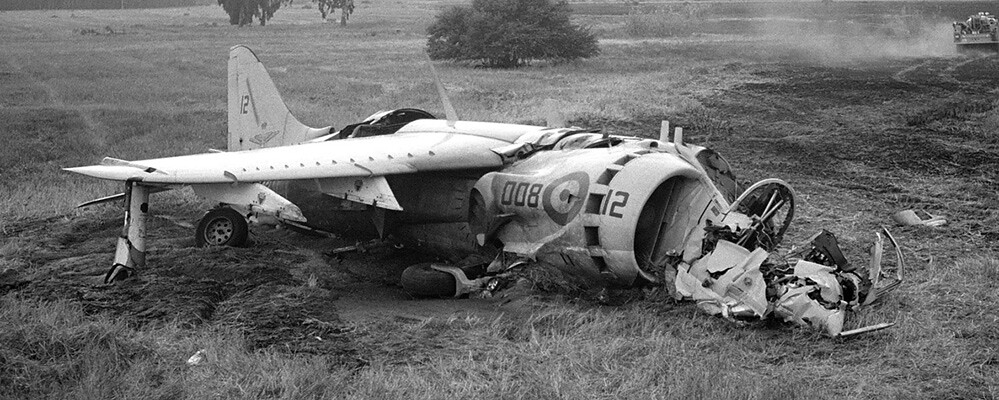
The efficient documentation service of Defense and Aviation has located a series of photos of a spectacular accident that occurred at the Rota Base on July 29, 1986.
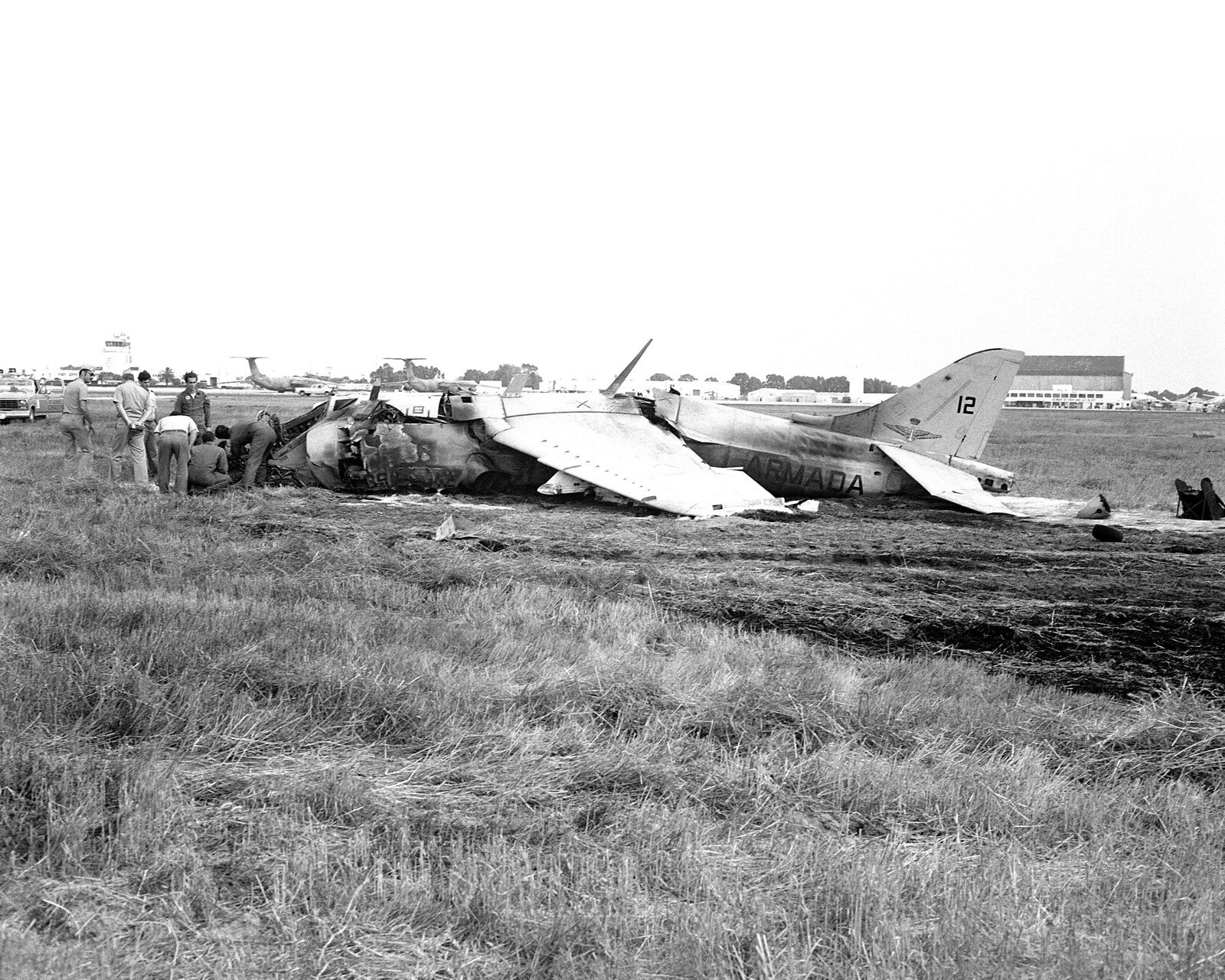
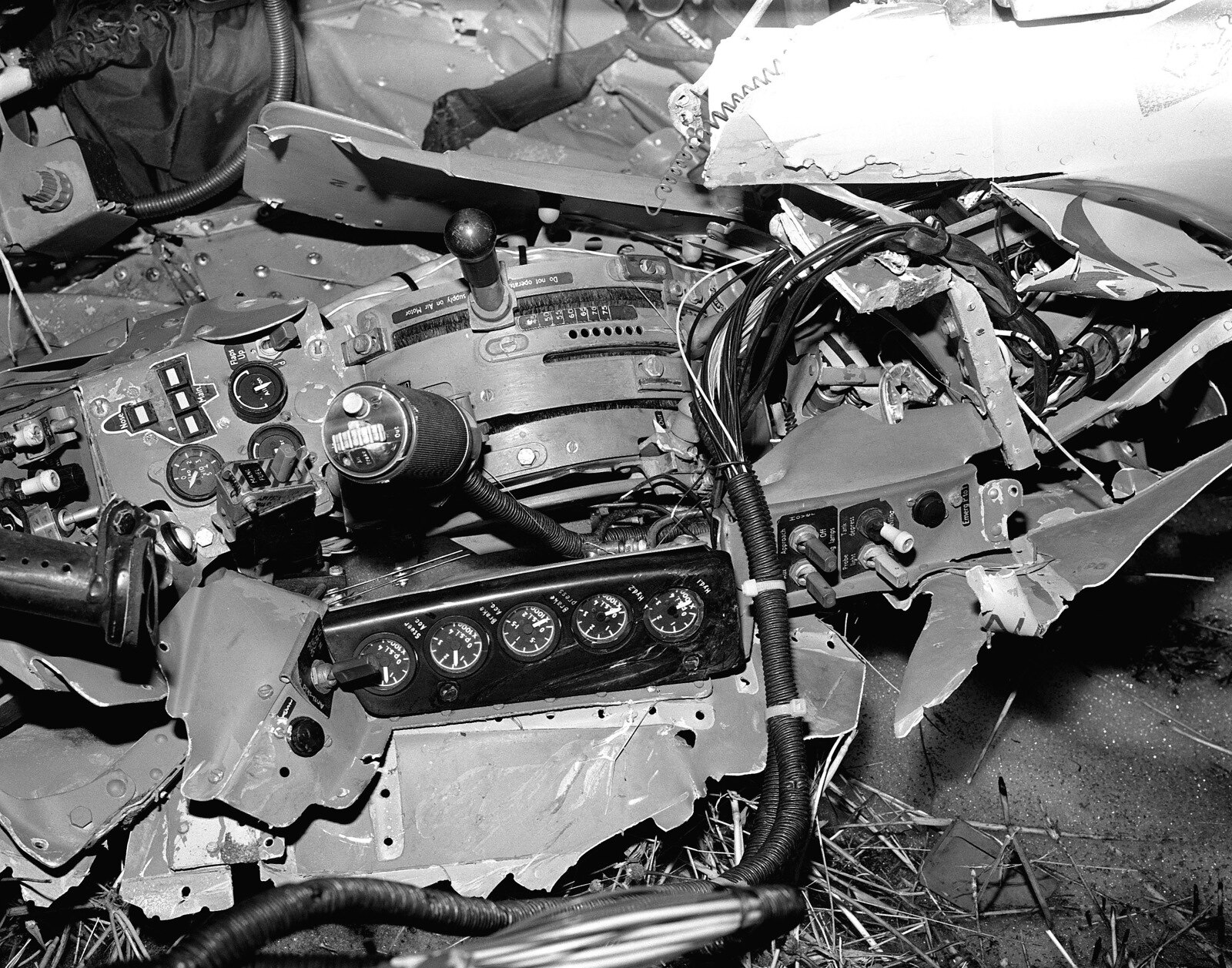
Las fotos, todas en blanco y negro, fueron tomadas por un fotógrafo de la Armada de Estados Unidos, el suboficial de 2ª clase David J. Cummings. No he encontrado ni rastro de estas imágenes rastreando Google, sólo aparecen buscando en los Archivos Nacionales de EEUU. Las fotos son de dominio público, y siendo inéditas en España, ha decidido publicarlas aquí por su enorme interés y porque no dejan de ser parte de la historia de la Aviación Naval española. Pulsando cada foto del accidente puedes verla ampliada para observar mejor los detalles.
The photos, all in black and white, were taken by a U.S. Navy photographer, Petty Officer Second Class David J. Cummings. I found no trace of these images by searching Google; they only appear in the U.S. National Archives. The photos are in the public domain, and since they are unpublished in Spain, I have decided to publish them here due to their immense interest and because they are part of the history of Spanish Naval Aviation. Clicking on each photo of the accident will enlarge it for a better view of the details.

The history of the AV-8S Harrier in the Spanish Navy
First, a little history. In 1973, the Spanish Navy purchased eight Hawker Siddeley Harrier Mk-53 single-seat and two Mk-54 two-seat vertical takeoff and landing (VTOL) aircraft. The aircraft purchased by Spain were built under license in the USA by McDonnell Douglas and had belonged to the US Marine Corps. Their designation in Spain was AV-8S or VA-1 Matador for the single-seat aircraft, and TAV-8S or VAE-1 Matador for the two-seat aircraft. The first aircraft arrived in Spain in 1976. A second batch of five more aircraft (Mk-55 single-seat) was purchased in 1980. All the aircraft were assigned to the now-defunct 8th Squadron and operated from the aircraft carrier "Dédalo".

Three of these aircraft were lost in three separate accidents: on May 28, 1980, October 22, 1984, and July 29, 1986, the latter two occurring at the Rota Naval Base. After being retired from service in 1996, nine of these aircraft (7 AV-8S and 2 TAV-8S) were sold to Thailand, whose Navy operated them aboard the aircraft carrier HTMS Chakri Naruebet (sister ship of the Spanish aircraft carrier "Príncipe de Asturias") until 2006. The Matadors were replaced in the Spanish Navy by the more modern EAV-8B Matador II, which are still in service.

The AV-8S 008-12 crash as told by its own pilot
The aircraft in question was a single-seat AV-8S Matador, the VA.1-11 / 008-12, with construction number 712226, according to Aviation Safety Network. It is not easy to find information about what happened to this aircraft in civilian media, but fortunately, the book "One Hundred Years of Naval Aviation 1917-2017", published by the Ministry of Defense in February 2017, not only includes an account of what happened, but also features the pilot himself, Lieutenant Commander Luis Miguel Belizón Conde (a Harrier pilot and father of a Harrier II pilot, incidentally), as the narrator.
"On June 30, 1986, during my AV-8S training, I completed my initial takeoff and landing qualification aboard the Dédalo," explains Lieutenant Commander Belizón. "At 10:00 a.m., I had the flight briefing, with takeoff scheduled for 11:00 a.m. Due to bad weather, I didn't take off until 7:00 p.m., eight hours later than planned. After the qualification on the Dédalo, I took off to return to base with less fuel than a student pilot would like, but still within acceptable limits. The rendezvous with my lead pilot also took longer than expected, and about 30 miles from Rota, I only had 1,000 pounds of fuel left, enough under normal conditions for one landing and one taxi, but far less than what a pilot in training is used to."

The account of events by Lieutenant Commander Belizón continues: "During the initial contact with the Rota tower, they informed me that, due to an emergency involving an American aircraft stopped on the runway, I should perform a vertical landing. Following the tower's request, I carried out the vertical landing procedure with the anti-skid system off. The vertical landing on board is performed with the anti-skid system turned off to have complete control of braking and the direction of the nose wheel."

"On short final, the tower informed me that the runway was clear, and I decided to taxi straight in to save fuel," explains Lieutenant Commander Belizón. "With so many changes in procedures, and somewhat stressed about fuel, I forgot to turn the anti-skid on. As problems never come singly, I touched down with a clear wind to the right, and with the wheel locked, the aircraft didn't align with the runway and veered to the right. Faced with this situation, I corrected with the rudder pedals and braked, resulting in a sharp left turn and a blowout of the main landing gear tires. This turn caused me to run off the runway to the left, and upon seeing a ditch, I ejected by pulling the ejection seat ring."

Everything we just read happened in just a few seconds. A pilot's mind works so fast that Lieutenant Commander Belizón explains what he felt when the ejection system didn't respond immediately: "When I pulled the trigger, I had time to think that the ejection system had failed. Then I was startled by the explosion of the cockpit glass,", an explosion triggered by the ejection system itself to reduce the risk when evacuating the pilot. "Another thing I felt was the pull on my shoulders as the parachute opened. I fell semi-conscious and was awakened by the sound of my leader landing on the runway. Having had a previous emergency, the ambulance took as long to arrive as it took me to free myself from the parachute, which was dragging me across the field."

Finally, Lieutenant Commander Belizón recounts a curious anecdote: "In the Squadron, there was a yellow boot where pilots who had blown out their tires by forgetting the anti-skid were noted. Due to the critical situation and my inexperience, that oversight, in my case, had worse consequences." The pilot of that Harrier also describes the consequences of the accident for the aircraft and its occupant: "Aircraft 812 was a total loss, and I suffered crush fractures to my second, third, fourth, and fifth thoracic vertebrae, due to the poor posture during my ejection."

I hope this post serves as a tribute to Lieutenant Commander Belizón and to all the Spanish naval aviators who have ever suffered an accident at the controls of their aircraft. Their example shows us that flying these planes involves assuming a high risk that can sometimes even cost you your life. Although it's never pleasant for a pilot to experience such a situation, for me they all remain heroes.


|
Don't miss the news and content that interest you. Join Defense and Aviation for free on Telegram: Click here to join |


Opina sobre esta entrada: