    |
|
|
|
|
|
|

Estonia, like Lithuania and Latvia, was invaded by the Soviet Union in 1940. After the German invasion (1941-1944), the Red Army returned.
Following the Soviet occupation in 1944, an anti-communist guerrilla group known generically as the "Forest Brothers" was formed in Estonia, Latvia, and Lithuania. I already told you about them here. The largest anti-communist guerrilla group of the three was the Lithuanian one. In Estonia, the Forest Brothers ("Metsavennad" in Estonian) began to form in 1941, in response to the mass deportations carried out by the Soviet invaders.
The Estonian Forest Brothers once numbered around 10,000 fighters, although some sources speak of between 15,000 and 16,000. In July 1941, they played a very important role, leading the Tartu Uprising on July 10 against Soviet forces fleeing from the Germans. Several hundred Forest Brothers managed to defeat the Soviet forces in that area, liberating southern Estonia and part of northern Latvia (for a short time, as the German invaders soon arrived).
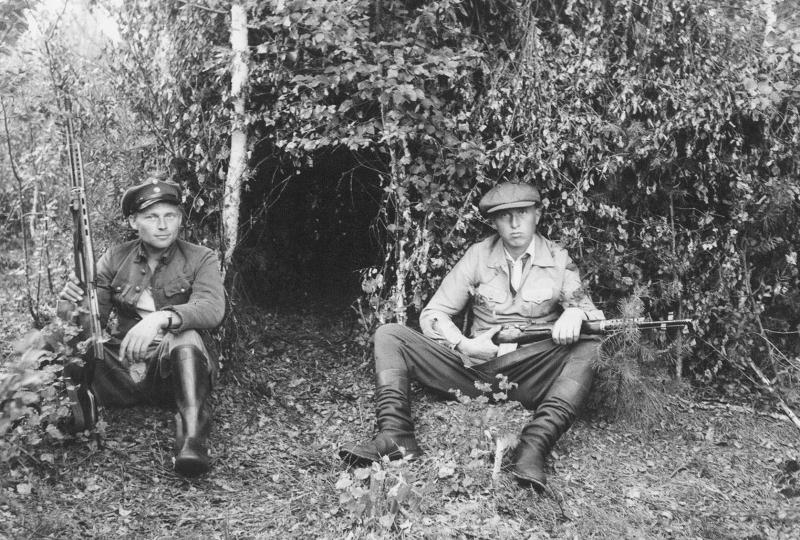
The Estonian anti-communist guerrilla movement reappeared in 1944 in response to Stalinist repression after the new Soviet occupation. This guerrilla movement was made up of various resistance organizations. The main one was the Relvastatud Võitluse Liit (RVL, Alliance of Armed Struggle), loyal to the Estonian Government in Exile, created in the spring of 1946, led by Endel Redlich "Robber" and destroyed by the Soviets in 1948. The military activity of the Estonian Forest Brothers continued until 1955, managing to eliminate hundreds of Soviet soldiers and members of Stalin's fearsome secret police, the NKVD.

At the end of 1944, the Forest Brothers group operating near Valga in southern Estonia composed a song that became very popular among the anti-communist guerrillas. The song is known today as "Metsavendade laul" (Song of the Forest Brothers). The lyrics are varied. Here you can listen to the version recorded by the Estonian traditional music group Untsakad in 1998, as the 14th track on their album "Metsa läksid sa":
The possible origin of the melody is a matter of debate, but in 2017, an Estonian forum noted that it probably originated from a popular 1919 Estonian foxtrot song, "Zilās puķes" (Blue Flowers), performed by Alfrēds Poriņš and published by Bellaccord, which was a popular song in independent Estonia during the interwar period:
It should be noted that "Metsavendade laul" was banned during the Soviet occupation of Estonia (1944–1991), and those who sang it could be fined or arrested by the Soviet police. Despite this, it became a popular song sung at birthday parties and other social gatherings, always leaving it for the end in case someone ratted out the singers and had to flee.
I have read testimonies stating that Estonian recruits in the Soviet Army even sang it as a marching song (it remains a popular song in the Estonian Armed Forces today). In July 1977, during the 4th Youth Song Festival organized by the Soviet regime in Tallinn, some of the audience started singing this song and the event was closed after their performance. In the 1980s, the growing anti-communist movement in Estonia used the song as a protest theme.

In recent years, the rise of Russian imperialism has brought this song back into fashion. In February 2014, Sõduri FM, a rock band formed by conscripts of the Vahipataljon (Guard Battalion) of the Estonian Defence Forces, recorded a rock version of "Metsavendade laul":
In 2024, the Finnish band Megaraptor recorded an epic metal instrumental version of "Metsavendade laul" (Finnish and Estonian are related languages and both peoples have important ties of brotherhood):
On July 6, 2025, at the Tallinn Song Festival, tens of thousands of people sang "Metsavendade laul," sending a clear message in defense of their independence in the face of threats from Moscow:
You can read here the most common lyrics of this song in Estonian, published by Laulud.ee
Seal metsaserval väikses majas,
kus elasid mu vanemad.
Seal metsaserval väikses majas
on pesa teinud punased.[Refr.] Ai-tših, ai-tšah, ai-tšah, ai-velled,
me metsavennad oleme.
Ai-tših, ai-tšah, ai-tšah, ai-velled,
me metsavennad eestlased.Ja meil ei ole senti raha,
me peame metsas elama
ja me ei saa, ei või, ei taha,
ei taha tiblat teenida.[Refr.] Ai-tših, ai-tšah …
Ja oma lippu sini-musta-valget
me ikka au sees hoiame
ning alles võitluses saab selgeks,
kes on meist õige eestlane.[Refr.] Ai-tših, ai-tšah …
Ja sinu sõstramustad silmad,
mis võlusid mu südame.
Ja sinu sõstramustad silmad,
ei need mul iial unune.[Refr.] Ai-tših, ai-tšah …
Here you can read the English translation:
There, in the little house at the edge of the forest,
where my parents lived.
There, in the little house at the edge of the forest,
the reds have made their nest.[Chorus] Ai-tših, ai-tšah, ai-tšah, si-brother,
we are brothers of the forest.
Ai-tših, ai-tšah, ai-tšah, ai-brother,
we, brothers of the forest, are Estonians.And we don't have a penny,
we have to live in the forest
and we can't, we don't want, we don't want,
we don't want to serve those bloodthirsty Russians.[Chorus] Ai-tših, ai-tšah …
And we will always honor our blue, black, and white flag,
and only in battle will it become clear
who among us
is a true Estonian.[Chorus] Ai-tših, ai-tšah …
And your black eyes, like blackberries,
will never, ever be forgotten.
And your black eyes,
I will never forget them.[Chorus] Ai-tših, ai-tšah …
---
Main photo: communistcrimes.org.
|
Don't miss the news and content that interest you. Join Counting Stars for free on Telegram: Click here to join |




Opina sobre esta entrada: