    |
|
|
|
 |
|
|

Wheeled armored vehicles are experiencing a resurgence in the defense industry, with some models being of considerable size.
Spain is participating in this trend with the VCR Dragón, a model that has experienced significant delivery delays, sparking some controversy. Among the alternatives available on the market is the GTK Boxer, a vehicle developed by ARTEC GmbH —a consortium formed by the German company KNDS Deutschland and the Dutch company Rheinmetall Defence Nederland B.V. (itself a subsidiary of the German firm Rheinmetall AG). The Bundeswehr (German Armed Forces) released a video today showcasing this model, specifically the CRV variant:
The Boxer originated in 1993 as a joint project between Germany and France, with the United Kingdom joining in 1996. As would later happen with the FCAS, France withdrew from the project in 1996 to develop its own vehicle, the VBCI. The Netherlands joined the Boxer program in 2001, and the first prototype was officially unveiled late the following year.
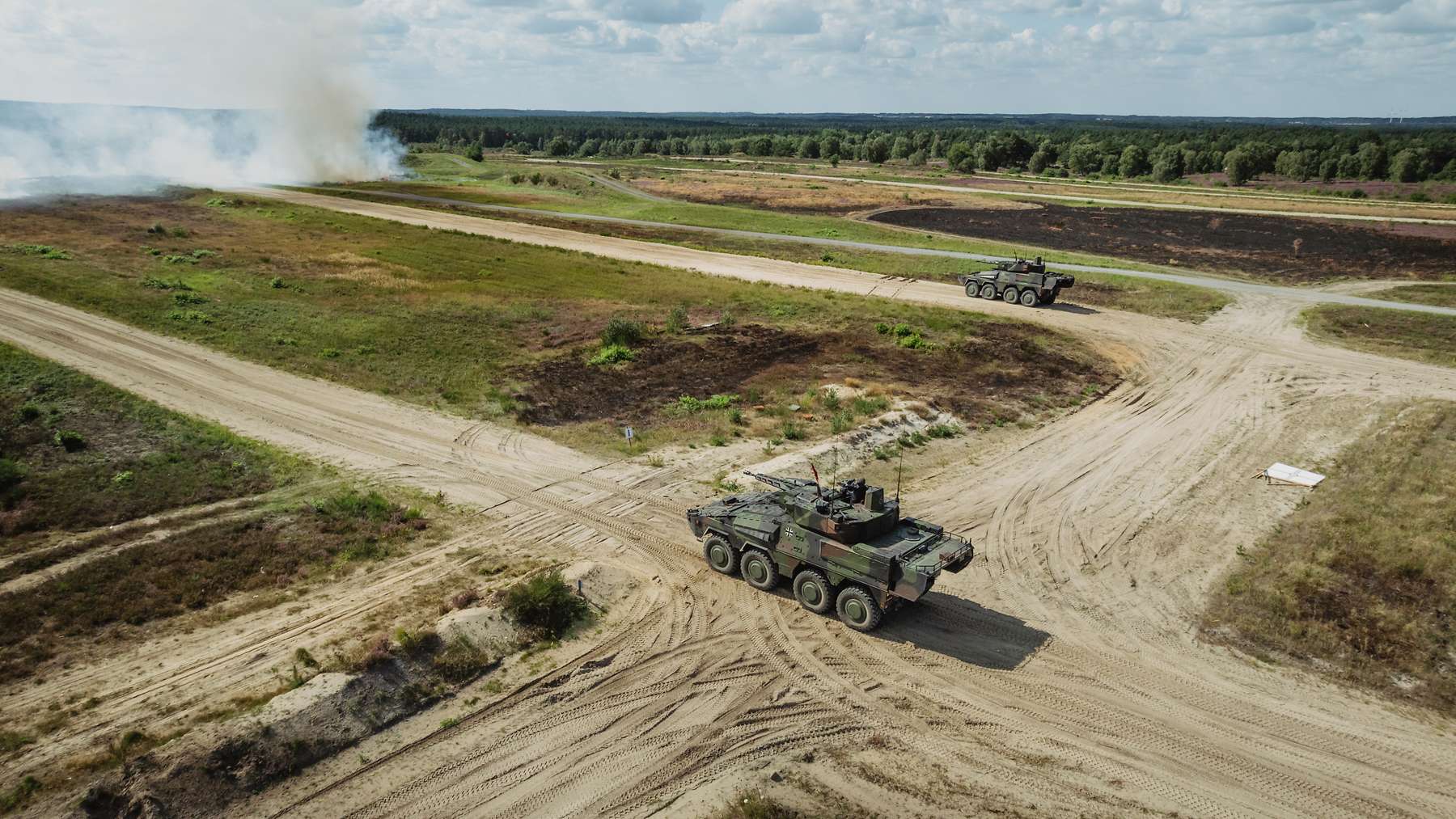
The Boxer is a modular vehicle, meaning it can be adapted for various missions simply by changing the mission module located at the rear of the vehicle. Germany has already purchased nine batches of vehicles across different variants —comprising hundreds of units—including transport vehicles, ambulances, command vehicles, and training vehicles.

The orders include Boxer CRV reconnaissance combat vehicles equipped with Lance 2 turrets (a variant jointly developed with Australia), featuring a 30mm automatic main gun, a 7.62mm coaxial machine gun, and a retractable launcher capable of carrying two MELLS anti-tank missiles (pictured below), the European version of the Israeli Spike LR2. The turret is also equipped with 40mm ROSY smoke grenade launchers. The Boxer CRV has a three-person crew (driver, seated at the front; commander and gunner, in the turret). The vehicle features 8x8 drive (like the Spanish VCR Dragón), a top road speed of 103 km/h, and an operational range of between 1,000 and 1,100 km.

The video and these photos show the first Boxer CRVs of Jägerbataillon 413 (413th Hunter Battalion) of Panzerbrigade 21 "Lipperland," a unit based in Torgelow, in the federal state of Mecklenburg-Vorpommern. In March 2024, the Bundeswehr signed a contract for the purchase of 123 Boxer CRVs, with the initial delivery of a test vehicle in May 2024, 19 production units in 2025, and the remaining 103 to be delivered between 2026 and 2030.

In the German Army, the Boxer CRV replaces the Rheinmetall Wiesel (pictured above), a much smaller, highly maneuverable, and very fast light tracked vehicle. The Boxer CRV significantly improves upon its predecessor's firepower, while also providing crew protection and maintaining high mobility.

The difference in size works against the Boxer: the Wiesel was a small vehicle compared to its successor, ideal for stealthy reconnaissance missions in German forests. The Boxer CRV is geared more towards being a heavy-weapons vehicle for infantry support, and in this regard, it holds a significant advantage over the Wiesel.
---
Photos: Bundeswehr.
|
Don't miss the news and content that interest you. Join Defense and Aviation for free on Telegram: Click here to join |




Opina sobre esta entrada: