    |
|
|
|
|
|
|
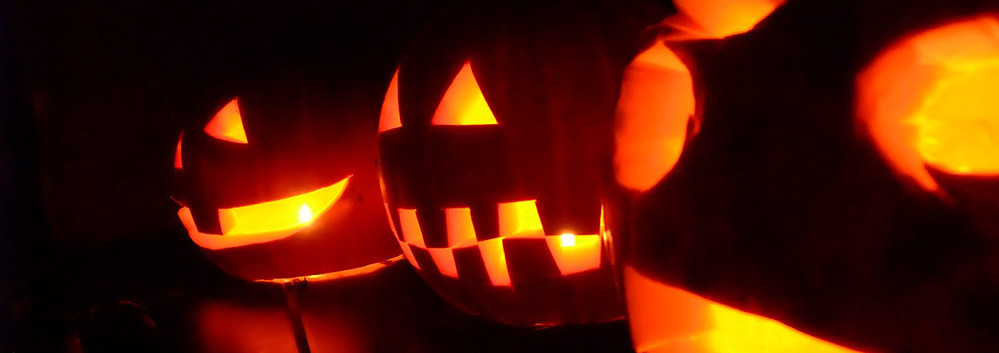
In many places in Galicia today they celebrate a festival called "Samaín", which many describe as a Galician "tradition" and some claim is "pre-Christian".
Tracing the origin of the supposed Galician 'tradition' of 'Samaín'
As a supposed "tradition," and a "pre-Christian" one at that, it seems extremely strange. If we limit the Google search to what was published before December 31, 2000, only 11 results appear mentioning "Samhain", and some of them have nothing to do with the supposed "tradition." If we search online for later years, on October 30, 2006, the Galician website Vieiros published a news item about some "Samaín" celebrations organized by nationalist groups. One of them, from Ferrol, claimed to have been celebrating this festival for nine years (that is, since 1997). Curiously, without leaving the slightest trace of it on the web: before that date in 2006, not a single reference to the "Samhain." How strange, isn't it?
It all started with a party invented in the town of Cedeira in 1989
The supposed "tradition" began with a teacher from Cedeira, Rafael López Loureiro, who published a book in 2003 identifying as "Samaín" certain traditions that occurred on these dates in some Galician towns, none of which were called "Samaín" or anything similar (the book does not provide any kind of documentation to indicate this). In case there was any doubt, on November 2, 2007 this teacher acknowledged to La Voz de Galicia that the first edition of "Samaín" was celebrated in Cedeira (La Coruña) at the end of November 1989, that is, it did not even coincide with the eve of All Saints.
For many years I have been collecting books on mythology, and particularly on Galician mythology. One of the most comprehensive when it comes to discussing local legends and customs is Vítor Vaqueiro's "Guía da Galiza Máxica," published in 1998 by Galaxia: it makes no mention of any "Samaín" festival in any Galician town, which is surprising if it is true, as some claim, that it is a Galician "tradition" of even "pre-Christian" origin. Coincidentally, that book only mentions one "Samaín" specifically in Cedeira, the one promoted by the aforementioned Rafael López Loureiro.
The inventor regrets the evolution of his invention
Coincidentally, this gentleman gave an interview to La Voz de Galicia on October 26, 2018 in which he acknowledged: "in 1990 I convinced the Chirlateira cultural society to hold a party" (note that he no longer claims that this first party took place in 1989, as he stated in the same newspaper in 2007). In the 2018 interview with López Loureiro, the author states that "the original idea of Samaín was to 'fight against Halloween.' But things took a turn and ended up giving rise to this new concept, also devised by this retired teacher.". Thus, the supposed "tradition" that some consider "pre-Christian" turns out not to be one at all: it is something invented by taking certain Galician customs that were never called "Samaín," they are called that to combat Halloween, and in the end, the same thing is done.
López Loureiro himself acknowledged his unease with the evolution of the festival, noting that "in the early years of Samaín in Cedeira, nobody wore costumes," but that in the end, "it was necessary to modernize it, to bring it up to date; before, we didn't even have electricity, and that changed everything." The inventor added: "There's more interest in entertainment and leisure than in culture. Throughout Galicia, there's a lot of misinformation, and associations and town councils rush to organize Samaín without further ado, because something has to be done, and instead of calling it what it is, Halloween, they call it Samaín. And it's not the same thing, just as Carnival isn't synonymous with Entroido." In short, the invention got out of hand, but despite this, he didn't give up on continuing to invent: "Samaín should be given a..." iconography that could be contrasted with the paraphernalia of Halloween."
'Samaín', an incorrect adaptation of the Irish word 'Samhain'
So, where did the name "Samhain" come from? In Ireland there was a pagan celebration, Samhain, which I've already talked about here. Halloween has a very distant connection to that celebration. Therefore, an incorrect adaptation was made of that Gaelic word, which isn't even pronounced "Samhain," but "Xaoin", at least using Galician spelling. In Irish Gaelic, that word refers to the month of November (etymologically it means "the end of summer"). When I wrote my post about Samhain in 2007, there were hardly any Galician websites that talked about that celebration.
The Galician tradition of the magosto, buried by the invention of Samaín
As I already said here five years ago, of course, everyone can celebrate whatever they want, from Geek Pride Day to Samhain, or even Groundhog Day. But importing foreign traditions and selling them to us as "our own" and even "pre-Christian" is a rip-off. And for public institutions to contribute to this, believing they are revitalizing a supposed Galician "tradition," is the height of absurdity.
Galician traditions at this time of year include All Saints' Day and All Souls' Day, as well as the Magosto (chestnut festival), which, paradoxically, is being overshadowed by the infamous "Samaín," imported from the US via Ireland. As I point out in the title of this post, "Samaín" is a "tradition" as much a part of Galicia as the music of the British band Queen, with two differences: before 1989, Galician kids of my generation listened to and sang Freddie Mercury's band's songs long before we'd ever heard of "Samaín," and nobody tries to sell us those songs as traditional Galician music today.
|
Don't miss the news and content that interest you. Join Counting Stars for free on Telegram: Click here to join |







Opina sobre esta entrada: