    |
|
|
|
 |
|
|

The United States is a nation with a powerful military aviation that has been identified, for decades, with a distinctive signature.
As we saw here a few years ago, the first country to use roundels on its military aircraft was France in 1912, although most nations did not use this type of emblem until World War I (1914-1918). The United States did not use a unified aeronautical roundel until May 19, 1917, a few weeks after entering the war.

Until then, the US Army had used a red star painted on the tail fins of its aircraft (an emblem that later identified the aircraft of its main enemy, the USSR), while the US Navy identified its aircraft with a blue anchor. These were insignia that did not make aircraft identification very easy. The insignia created in 1917 was circular with a blue background, a white five-pointed star, and a red circle in the center, representing the three colors of the US national flag.
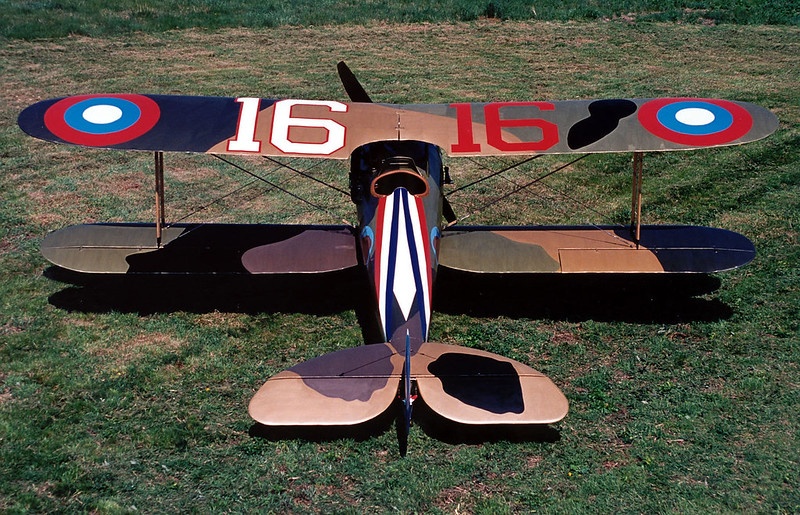
The 1917 insignia was changed in 1918 to a roundel similar to the French one, with a red stripe on the outside, a blue stripe in the middle, and a white circle in the center. It is the insignia most associated with US aircraft in World War I. In 1919, the 1917 insignia was reinstated and used until World War II. After the Japanese attack on Pearl Harbor, the insignia established in 1917 presented an identification problem, as the Japanese Empire used a red circle to identify its aircraft.

To avoid confusion with Japanese aircraft, the US removed the red circle from its national insignia on May 15, 1942, resulting in an emblem consisting solely of a blue circle and a white star. This emblem remained in use until June 28, 1943, and coexisted, from October 1942, with a version featuring a yellow border, which allowed for better visibility of the insignia on aircraft with olive drab fuselages or camouflage patterns. It should be noted that as early as February 26, 1941, the US Army Air Corps began painting the insignia on only one wing (the upper left and lower right) to prevent an insignia on each wing from allowing the enemy to better aim. The Navy did not implement this change until February 1, 1943.

The United States Armed Forces were not entirely convinced by the result of this insignia, as it made it very similar to the roundel used by British aircraft at that time. Tests were conducted on other designs, including one with two stars. Finally, it was determined that the shape of the insignia was more important than the colors, and two white side bars were introduced. In an initial design, these bars were included with a red border around the insignia, a border that was not very popular with some crews.

On August 14, 1943, both the Army and the Navy adopted a blue-bordered insignia, replacing the unpopular red-bordered one used a few months earlier. This proved highly advantageous for the Navy, as the blue paint on many of its aircraft was very similar to that of the insignia. Consequently, on many naval aircraft, only the star and white stripes were painted, thus conserving paint.

The U.S. Armed Forces ended World War II without any further changes to the emblem. After all, they'd had enough by then. However, the story of these national insignia was not over. On January 14, 1947, a minor variation was introduced to the insignia of August 1943, adding two red bars to the white side stripes, thus providing a better representation of the U.S. national flag. This insignia remains in use today. Although it is often associated with the United States Air Force (USAF), it should be noted that it was adopted a few months before its founding, which took place on September 18, 1947.

The 1947 insignia is still used today on aircraft with high-visibility livery. Interestingly, the United States Army, which introduced this insignia, hardly uses it today. Its helicopters do not use it (they only display the inscription "United States Army" in black letters). The Army only uses these insignia on its few fixed-wing aircraft.

In the 1980s, the USAF, Navy, and Marine Corps began using low-visibility insignia. The USAF introduced a gray-coated version on its aircraft, although many F-15s have used a colored version of the insignia without the blue border since the 1970s.

The Navy and Marines have opted for gray versions of the national insignia. The reason for these low-visibility insignia is that with IFF systems, which serve to distinguish friendly and enemy aircraft, the usefulness of national insignia is much less than when they became popular during the First World War.

---
Main photo: U.S. Navy. The U.S. national aircraft insignia painted on a Navy T-6B Texan II training aircraft.
|
Don't miss the news and content that interest you. Join Defense and Aviation for free on Telegram: Click here to join |


Opina sobre esta entrada: