    |
|
|
|
 |
|
|

On December 7, 1941, without a prior declaration of war, the Japanese Empire attacked the United States in the Hawaiian Islands.
The Japanese attack on Pearl Harbor marked the entry of the United States into the Second World War—both in the Pacific Ocean and across the Atlantic—since, as of 1940, Japan was a member of the Tripartite Pact alongside Nazi Germany and Fascist Italy.

The serious setback suffered by the United States in that Japanese attack raised fears of a possible Japanese invasion of the North American nation’s West Coast. This fear was not merely a product of paranoia: in June 1942, Japan occupied the islands of Attu and Kiska—U.S. territory in the Aleutian Islands chain, which is part of Alaska. The American public’s outrage over the attack on Pearl Harbor paved the way for a daring operation.

On April 18, 1942, 16 B-25B Mitchell bombers of the U.S. Army Air Forces (USAAF) took off from the aircraft carrier USS Hornet (CV-8)—a vessel with a short-lived history: it was commissioned on October 20, 1941, and sunk by the Japanese a year later, on October 27, 1942. Those 16 bombers had one mission: to avenge the Japanese attack on Pearl Harbor. This type of medium bomber had never before been operated from an aircraft carrier, as they could not take off from one when fully loaded.
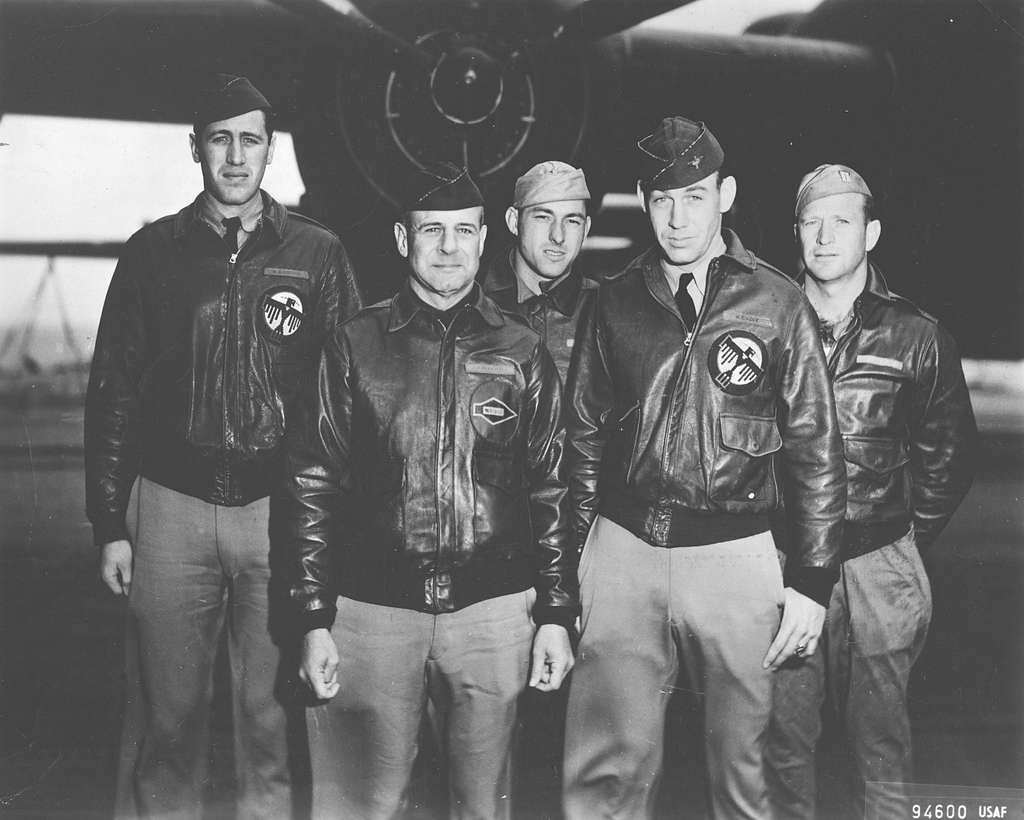
The aerial expedition was led by Lieutenant Colonel James H. Doolittle (1896–1993), an experienced aviator. The airmen who took part in this operation belonged to the 17th Bombardment Group of the USAAF—the first unit to be equipped with the B-25, a twin-engine aircraft capable of carrying up to 2,268 kg of bombs in its bomb bay. For this operation, each B-25B carried a crew of five and only four 500-pound (225-kilogram) bombs, which had been specially designed for the mission; at full payload, the aircraft would not have been able to take off from the flight deck of the USS Hornet. The mission’s objective was to strike various targets in Tokyo, Yokohama, Yokosuka, Nagoya, and Kobe.

The plan was to launch the aircraft 400 miles from Japan, strike the targets, and reach territory within the Republic of China that was not occupied by the Japanese. The takeoff had to be moved up because the fleet carrying the B-25s encountered a Japanese patrol vessel. Fearing that the vessel might have had time to relay the position of the American ships to its base—and in order to preserve the element of surprise—the aircraft were launched 645 miles from Japan.

Not all the planes reached their targets, but the attack had a major impact in Japan, as it caught their General Staff by surprise; at the time, it was not believed that the Americans possessed the capability to launch an attack from such a distance. Most of the planes reached China, while one of them—number 8—landed in the Soviet city of Vladivostok, where the airmen were treated as prisoners of war by the Soviets—even though the U.S. and the USSR were already allies at the time (though Moscow did not declare war on Japan until August 8, 1945, by which point the Japanese were already defeated).
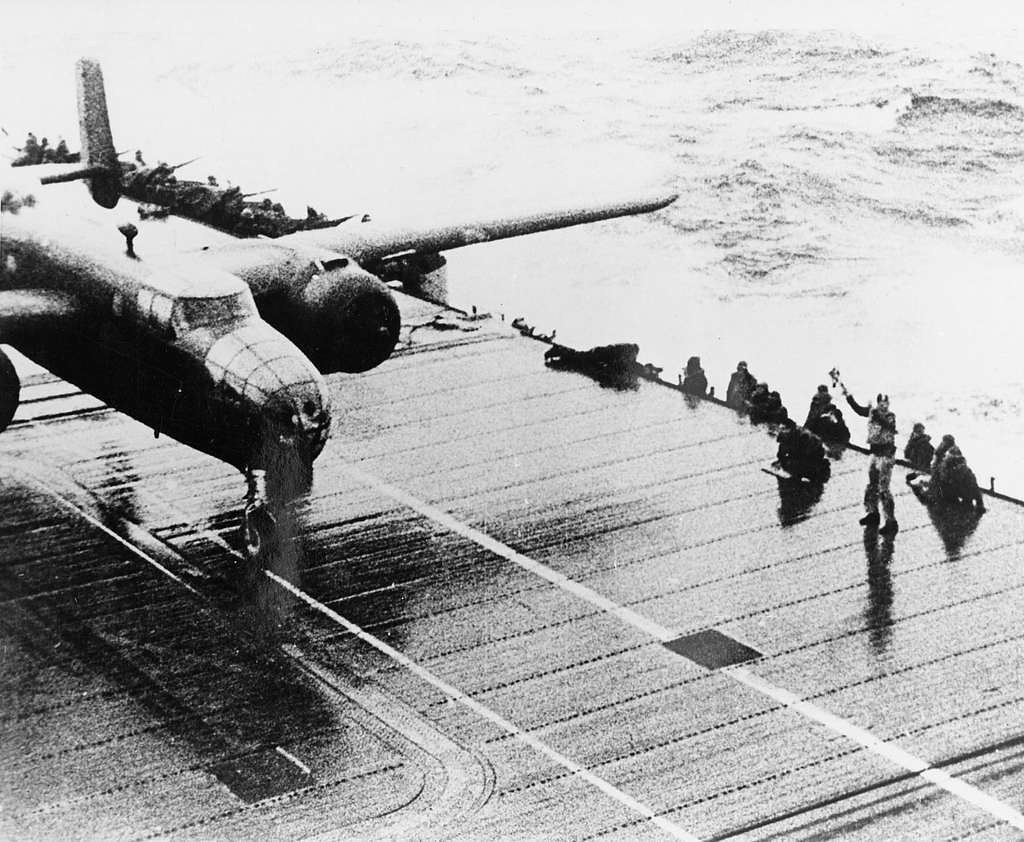
Eight airmen from the Doolittle Raid were captured by the Japanese; three of them were executed on false charges of having attacked civilian targets, and another died while in captivity. Two of the airmen died near the coast of China, and another perished within Chinese territory; the rest managed to return, six of them having sustained serious injuries. Given the loss of all the aircraft, Doolittle believed he would face a court-martial, but instead, he was awarded the Medal of Honor—the highest U.S. military decoration—and promoted to brigadier general. The last survivor of this raid, Richard E. Cole, passed away on April 9, 2019, at the age of 103. He had served as the co-pilot of the aircraft flown by Doolittle.
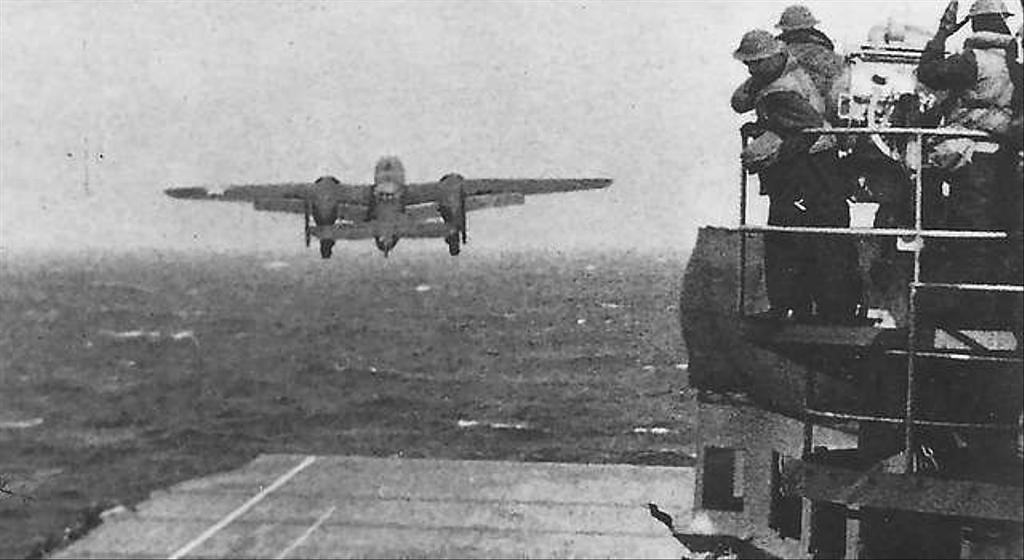
A few days ago, the YouTube channel Yarnhub (which I recommend subscribing to if you are interested in military history) released an excellent computer-animated video recreating this daring attack mission against Japan:
---
Main photo: U.S. National Archives.
|
Don't miss the news and content that interest you. Join Defense and Aviation for free on Telegram: Click here to join |



Opina sobre esta entrada: