    |
|
|
|
|
|
|

On July 18, 1936, 90 years ago, the Spanish Civil War began, the bloodiest war suffered by Spain in the 20th century.
Today, the Spanish left perpetuates a narrative about that war that omits important facts, with the undisguised aim of concealing the role of socialists, communists, and anarchists in that civil conflict. According to this narrative, the war pitted democrats against fascists who wanted to destroy the idyllic democratic experiment of the Second Republic. The left believes that any disagreement with this narrative makes you a "fascist," but historical facts cannot be censored in such a crude manner, with which the left seeks to erase the traces of its own crimes before and during that war.

The authoritarian agenda imposed by the left in the Second Republic
To begin with, the Second Republic was anything but a model democracy. It began with the burning of churches and convents by leftists, a crime in which priceless artistic and cultural treasures were lost, and which was repeated again in 1936, again at the hands of the left. The left imposed its authoritarian agenda on that regime, with censorship laws that were seriously detrimental to religious freedom and freedom of education. The left's objective from the beginning was to expel the right wing from the new regime, even resorting to violence to achieve this.
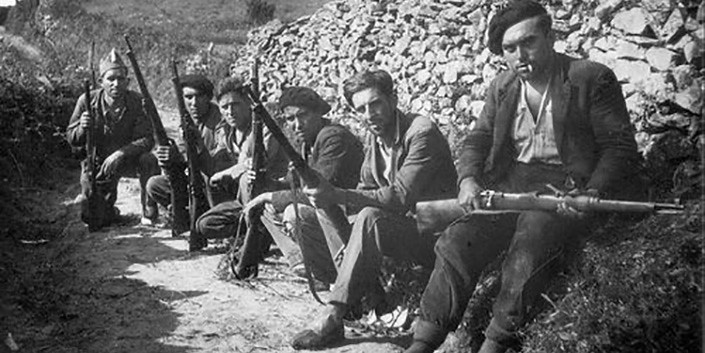
Leftist coupism attempt following a center-right electoral victory
In this regard, it cannot be forgotten that the Spanish Socialist Workers' Party (PSOE) led a coup d'état in 1934 after losing the previous year's elections, in order to prevent the right wing from coming to power. This armed insurrection was the prelude to the Civil War: the coup leaders murdered 33 priests and religious figures and 300 members of the military and security forces, and also destroyed 17 churches, 40 religious buildings, and dozens of factories, bridges, houses, and public buildings. The perpetrators of the coup did not spend even a year and a half in prison: the left granted them a scandalous amnesty as soon as it returned to power, leaving many blood crimes unpunished. That coup was no surprise: the PSOE had been exhibiting a coup-plotting and anti-democratic rhetoric, in which it openly advocated for a dictatorship.
It wasn't the only leftist party that openly displayed its intentions during those years. The Communist Party of Spain (PCE) was already openly advocating for the imposition of a Soviet-style regime in Spain, openly taking as a reference a totalitarian regime in which dictator Lenin had killed a million people in six years amidst a brutal wave of repression.
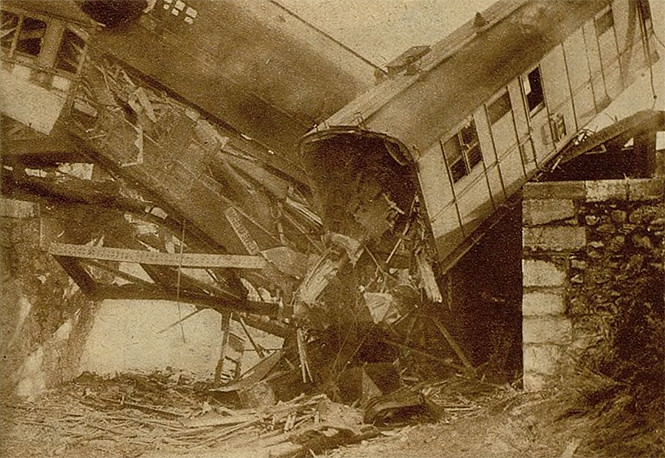
The left also tends to forget that after the center-right's electoral victory in the November 1933 elections, the anarchists unleashed a wave of violence and terrorism throughout Spain on December 8, 1933, the very day the new legislature opened in the republican parliament. It was a coup d'état disguised as a "revolutionary strike," during which several trains suffered terrorist attacks, resulting in 23 deaths and dozens of injuries.
The wave of violence unleashed by the left in February 1936
The war began when a segment of society and the army grew weary of a wave of disorder and crime perpetrated by the left and condoned by the government following an electoral victory for the left in February 1936 thanks to electoral fraud, now well-documented and strikingly reminiscent of the frauds perpetrated by the socialist dictatorship in Venezuela today. On June 16, 1936, the leader of the right-wing CEDA coalition, José María Gil Robles, detailed the wave of violence from the rostrum of the Cortes:
"From February 16 to June 15, a numerical summary yields the following data: churches totally destroyed, 160; assaults on temples, fires extinguished, destruction and attempted assaults, 251; deaths, 269; injuries of varying severity, 1,287; personal attacks thwarted or whose consequences are unknown, 215; robberies carried out, 138; attempted robberies, 23; political and private centers destroyed, 69; the same attacked, 312; general strikes, 113; partial strikes, 228; newspapers totally destroyed, 10; attacks on newspapers and attempted attacks and destruction, 33; bombs and firecrackers that exploded, 146; collected unexploded, 78."
Thus, months before July 1936, Spain was already experiencing a situation of widespread violence that made a democratic regime unsustainable, giving way, with dangerous speed, to an authoritarian drift of the left. This drift culminated in an event about which the left has shown its amnesia these days, exhibiting its particular idea of "historical memory": the assassination of the right-wing deputy José Calvo Sotelo on July 13, 1936, a crime perpetrated by police and gunmen of the PSOE who had previously kidnapped him from his home. That state crime is considered by many historians as the event that triggered the Spanish Civil War.
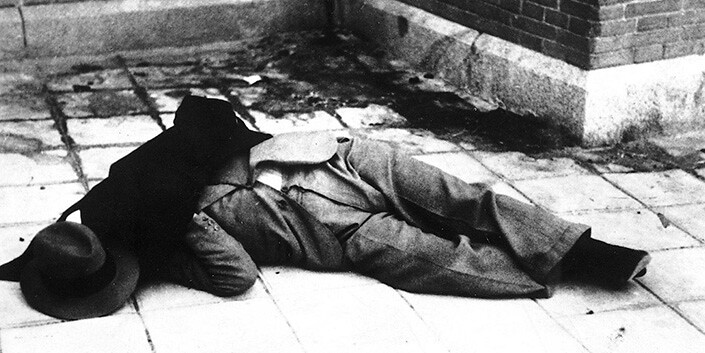
Anti-Catholic persecution and rapes of women by leftist militiamen
Once the Civil War began, the so-called Republican side witnessed the transformation of what remained of the Second Republic into a Soviet-style regime, due to the enormous influence exerted by the PCE (Communist Party of Spain) and the Soviet aid sent to that side by the dictator Stalin. This totalitarian drift manifested itself in a brutal anti-Catholic persecution in which leftists murdered 13 bishops, 4,184 priests, 2,365 monks, and 283 nuns, many of whom were also raped.

The rapes perpetrated by the left during that war took on purely monstrous characteristics, as was evident in the sexual assaults, torture and murder of three Catholic nurses by leftist militiamen in Astorga (León) on October 28, 1936. The victims, María Pilar Gullón Yturriaga (25 years old), Olga Pérez-Monteserín Núñez (23 years old) and Octavia Iglesias Blanco (41 years old), were beatified five years ago by the Catholic Church amid absolute silence from the leftist media, including Televisión Española (TVE), the public television controlled by the government of Pedro Sánchez.

The massacre of 5,000 political prisoners, including children, in Paracuellos de Jarama
A few days after those horrendous crimes, the communists began the biggest massacre of the Civil War in Paracuellos de Jarama (Madrid), with the murder of some 5,000 men, women and children (in these crimes 276 minors were massacred), who had previously been imprisoned for political or religious reasons, many of them for the mere fact of being Catholic. The massacre began on the night of November 6-7, 1936. A document dated November 27, 1936, indicates that one of those shot, José Cuquerella Moscardó, was described as a "dangerous fascist" after his murder alleging that "religious items were found in his home during the search", an example of the concept of democracy held by the authorities of the Republican side.
That religious persecution and all those atrocities ended up swaying many Catholics to the side of the rebels, both within Spain and in foreign countries. The dissemination of the crimes perpetrated by the left against Spanish Catholics shocked Christians in other nations and, in some cases, was a reason for many of them to enlist as volunteers to fight against the attempt to impose a Soviet dictatorship in Spain, since by then the horrors of communism in Russia were already widely known.
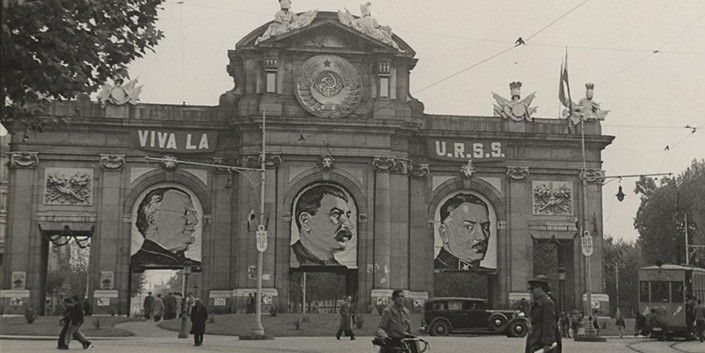
A war between anti-democrats
Obviously, this does not remotely justify all the crimes committed by the side that ended up being led by General Franco nor those committed in the moments after the end of the war, crimes that in many cases had been preceded or simultaneous with mass murders perpetrated by the Republican side, including the execution of dozens of writers for political reasons, crimes that today are joined by the official forgetting of their victims. As I have been saying for years, the Spanish Civil War was a war between two sides that shared a very similar rejection of democracy, in one case a rejection inspired by fascism (a movement on the rise at the time) and in the other case inspired by Marxism, a totalitarian movement that has established about fifty dictatorships without the left having the slightest decency to call them that, as we still see today in the cases of China and Cuba.
What happened during the Spanish Civil War should serve as a warning and a lesson to all Spaniards against political fanaticism and the eagerness of certain extremist groups, both left and right, to justify violence for political ends. However, the left has turned its narrative about that war into an attempt to win it 90 years later, establishing a biased and sectarian reinterpretation that presents the Republican side as the good guys and the democrats, and the Nationalist side as the bad guys and the anti-democrats. This is being done, moreover, by a left that is exhibiting openly authoritarian attitudes that are increasingly reminiscent of those that the same left displayed before the war. Some, it seems, remain determined to repeat the worst episodes of history.
Related articles:
|
Don't miss the news and content that interest you. Join Counting Stars for free on Telegram: Click here to join |




Opina sobre esta entrada: